
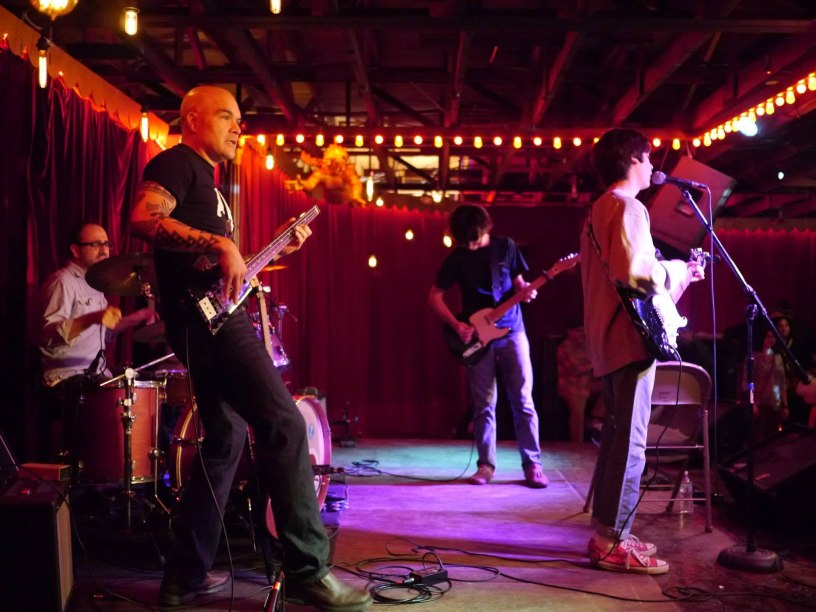
It was not until I stopped playing music that I could really enjoy listening to it.
When I was playing, I was so focused on the technical aspects of my instrument that I struggled to experience the whole song. I was listening for execution. The audience was experiencing something much bigger: the song, the performance, the feeling, flaws and all.
My expertise had become a filter. Sometimes it kept me from enjoying the very thing the expertise was supposed to help me create.
I think about this when I watch people build products, especially now that AI is allowing so many more people to build.
You can get every note right. But are people dancing? Are they tapping their feet or bobbing their heads to the beat? Is what you are creating connecting with the people you created it for?
Every product creates an experience. Someone feels capable, confused, relieved, frustrated, entertained, or overwhelmed while using what you built. That happens whether you planned for it or not.
We should never leave that experience to accident.
Start with a person in a situation. What are they trying to accomplish? What do they already understand? How much time and patience do they have? How should they feel when they are finished?
“Easy to use” used to be a compelling evaluation. Today, I think it is the minimum expectation.
The bar should be “an absolute pleasure to use.” “I can’t stop using it.” “I can’t imagine going back to how I did this before.”
When you design for an experience, you need to swing for the fences. Functional parity might get you onto a comparison chart. You want to create something people would deeply miss if it disappeared.
What that feels like depends on whom you are building for.
An expert might find that pleasure in having precise control, with nothing interrupting their concentration. Someone approaching the same task for the first time might find it in accomplishing something they never believed they could do. Both can have an extraordinary experience, but you have to understand what makes it extraordinary for each of them.
And “I can’t stop using it” does not always mean spending more time inside your product. Sometimes the experience people cannot live without is the one that reliably gives them their time back. They return because of what it makes possible in the rest of their lives.
This is why I believe so much of creating a great product is social science. You have to understand what people value deeply enough to create an experience they actively want in their lives.
AI makes that understanding more consequential.
People who once needed substantial funding and a complicated organization can now attempt products on their own or with a small team. More people can create an app, produce a song, make a film, or launch a service.
For those builders, this is an extraordinary opening. Their knowledge of a problem can finally become something other people can use.
But the ability to produce something does not establish that anyone will care about it. As more people gain access to the means of creation, understanding a particular audience becomes a greater part of the work.
The technology may let you produce the music. You still need to understand what makes your audience want to dance.
I was fortunate enough to experience the rise of Duo in cybersecurity. Multi-factor authentication was already an established idea. What stood out to me was the attention Duo paid to the people who had to live with it.
Security professionals needed protection they could deploy and manage. Employees needed to get into their applications and get on with their work.
Duo made usability central to that relationship. Its early messaging explicitly emphasized making authentication accessible to a broad audience, using phones people already had. Duo’s 2012 announcement describes that ambition.
The lesson I took from watching Duo was that the experience could change who a security product was for. People should not need to develop an interest in authentication to use it successfully.
I see a similar design ambition in Meta’s Muse. Meta presents it through familiar activities and a familiar interaction: message it about something you need done. It is available through its app and WhatsApp, with free access and paid subscriptions for additional use. Meta’s launch announcement
What interests me is the distance between a technical capability and a reason an ordinary person would use it.
“Agentic AI” describes a category. “Help me get this off my plate” describes an experience someone can want.
The Tamagotchi analogy is useful here. A virtual pet gave people an immediately understandable role and relationship. You cared for something. You checked on it. You had a story about it.
That is a useful test for a product: can someone describe what it means in their life without explaining its architecture?
“I finally got that task done.”
“I felt confident doing something I had never done before.”
“I had so much fun that I brought a friend.”
Those stories tell us what the experience delivered.
This is also why I feel the Chief Technology Officer’s role is becoming that of a Chief Translation Officer. The responsibility includes explaining complex systems in terms people can understand: what becomes possible, whose problem gets solved, and why the outcome matters.
That translation needs to work in both directions. You have to understand someone’s experience well enough to translate their needs into decisions about the technology. Then you have to explain the value of those decisions without requiring that person to become a technologist.
Muse also illustrates why go-to-market belongs in the design conversation from the beginning.
A subscription price is part of the experience. So is the place someone discovers the product, the language used to explain it, and everything they must do before receiving value.
For someone who has never used an AI agent, $20 a month can mean paying to find out whether they even understand the category. Free access changes that first decision. It creates an opportunity to experience value before making a financial commitment.
That does not prove free access will produce a lasting business. It does show how pricing can open or close the door to an audience.
One business model I find interesting would let consumers begin for free while businesses pay a small share of the value created through transactions. That is a possibility worth exploring, rather than an outcome we should assume. Whoever pays, the economics eventually have to support the experience.
A small builder will have different resources from Meta. The transferable lesson is to understand what prevents the intended customer from getting started, and design a sustainable way through it.
A compelling experience and a way to reach the people who value it belong together. They do not guarantee success, but a weakness in either can undermine the other. Distribution brings people to a promise. The product has to fulfill it.
There is a trap here for talented builders.
Imagine you are among the most skilled people in your field. You build something that feels obvious and natural to you. Every shortcut makes sense. Every option is useful. Every assumption is familiar.
You may have designed an excellent experience for people who share your expertise while making everyone else work to catch up.
A specialist audience can be exactly the right audience. The mistake is choosing it accidentally while believing you are building for everyone.
Think about playing music at a wedding. Your job is to understand what the couple and their guests want to hear and experience. Your personal list of fifty favorite songs tells you very little about that.
You might love every song you play and execute each one beautifully while the dance floor stays empty. Meanwhile, a song you would never choose for yourself might have grandparents, friends, and children dancing together.
The work is allocentric: centered on other people. Your own preferences cannot be the measure of their experience.
And you have to pay attention while that experience is happening. Are people getting up to dance? Are they singing along? Are they tapping their feet at their tables? Or are they waiting for you to finish?
Can you share in their enjoyment even when the song is not a personal favorite? Can you recognize their disappointment even when you are proud of your performance?
That is the shift builders need to make. We have to let the audience’s experience affect our judgment of what we have created.
Game designers face a similar test. The code can work correctly and the architecture can scale, but players still need a reason to keep playing. Depending on the audience, that reason might be competition, discovery, connection, or simply a few minutes of enjoyment.
I feel the Chief Executive Officer’s role is becoming that of a Chief Experience Officer for the same reason. Great experiences, measured by the value people actually receive, can drive growth through continued use, recommendations, and a willingness to pay.
Someone has to take responsibility for the whole experience: the promise that attracts a customer, the first attempt to use the product, the result, and what happens when something goes wrong. Each part shapes whether that person comes back.
For a solo founder, these responsibilities may belong to the same person. Being able to build, explain, and sell something still requires understanding how another person experiences it.
So how do we measure an experience?
Completing a task successfully tells you the product works. We should aim higher: did the experience make someone want to use it again? Did they tell someone about it? Did it become something they rely on? What would they miss if it disappeared?
For a tool promising relief from administrative work, measure whether people finish the task, how much help they need, and whether they trust the result. Then find out what that relief means to them. Did they finally stop spending Sunday evenings catching up? Can they take on work they previously had to turn away?
For a game, watch whether the intended players want another session and what brings them back. For a creative tool, look for the moment someone makes something they are proud to share.
Ask people to describe what happened in their own words. Listen for the difference between “it worked” and “you have to try this.”
Downloads tell you someone arrived. The stories they tell and the choices they make afterward reveal whether you created an experience that matters.
Before building the next feature, I would ask five questions:
- Who is this experience for, and what situation are they in? Be specific about their knowledge, motivation, and constraints.
- What would make this an experience they cannot imagine giving up? Describe the pleasure, confidence, relief, or possibility you intend to create—and why it matters to this particular audience.
- Where have my expertise and preferences become assumptions about theirs? Examine the choices that feel obvious to you.
- How will they find, understand, and try it? Include pricing, setup, trust, and the path to the first useful result.
- What will their behavior and feedback tell me—and am I willing to change? Decide how you will recognize both connection and disappointment.
AI has given more of us the opportunity to build what we once could only imagine.
The responsibility that comes with that opportunity is to understand the people we are building for. Listen to their stories. Watch what they do. Let their experience change your decisions.
You know how much work went into the music. Are the people you came to play for dancing?

