
The word cyber has always made me cringe a little.
An awkward admission for someone who has spent decades in cybersecurity. I use the word. I respect the work and the people doing it. But the prefix always sounded like someone had added blue lighting to something we already understood.
Computer security apparently needed a better outfit.
For years, that was about as much thought as I gave it. Then I got curious. Where did cyber come from before we attached it to threats, insurance policies, and practically every security conference on the planet?
That curiosity led me to Norbert Wiener.
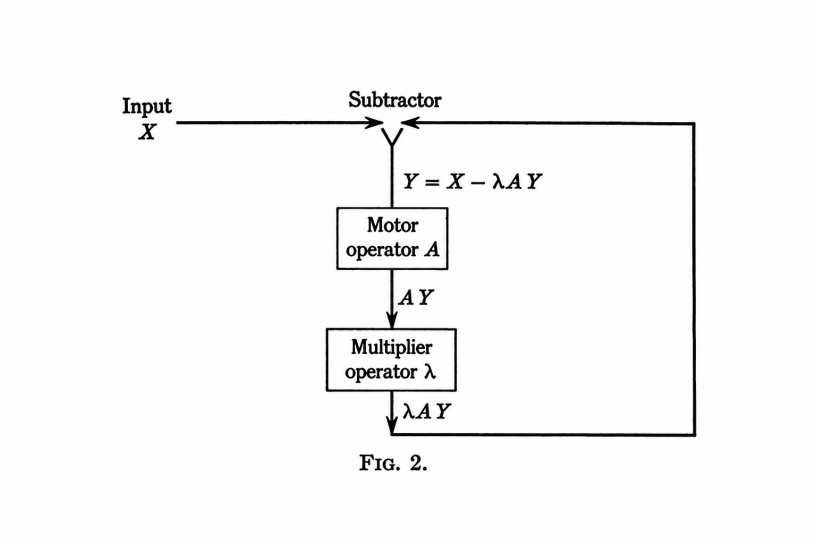
Wiener was an MIT mathematician who helped establish modern cybernetics. His 1948 book explored communication and control in animals and machines, including how feedback helps systems adjust what they do.
Think about steering. You have an intended course, you observe where you are actually going, and you adjust. What happens next tells you whether the adjustment helped.
Wiener and his collaborators needed language that could connect these ideas across disciplines. He dated their naming of cybernetics to 1947, the year before the book appeared.
He did not give us cybersecurity. We managed that part later.
Science fiction helped carry the vocabulary into new territory. William Gibson introduced cyberspace in “Burning Chrome” in 1982 and used it again in Neuromancer in 1984. Cyberpunk gave us networks, powerful corporations, and people working their way through systems that rarely had their best interests in mind.
Then the internet became part of everyday life, and cyber found steady employment as a prefix. Cybercafés. Cybercrime. All sorts of familiar things suddenly sounded like they had arrived from the future.
Cybersecurity appeared along the way. Dictionary.com dates its first recorded use to 1985–1990, although it took longer to become the everyday label many of us used.
I was already doing the work before that label became common around me. We called it computer security, information security, InfoSec, or IT security. Those terms have their own emphases, but the responsibilities were familiar: protect information, manage access, understand the systems, and investigate what went wrong.
We had plenty to keep us busy while the naming worked itself out.
And I understand that names matter. Spend enough years doing something and it becomes part of who you are. A professional title can hold decades of experience, hard lessons, and pride in helping people.
My objection to cyber was a small personal irritation. Still, I carried it around for a surprisingly long time.
Then I went back to Wiener’s choice of name.
The Greek root behind cybernetics is kybernētēs, meaning steersman, helmsman, or ship’s pilot. Wiener connected it directly to ships’ steering mechanisms and their use of feedback.
A steersman.
That landed differently once I started working hands-on with AI.
When I work with an agentic harness, the software that lets an AI model use tools and carry out work, steering is a pretty good description of what I do.
I have an outcome in mind. I give the agent direction and let it work. I look at what comes back, compare it with what I intended, and decide what needs to happen next.
Sometimes I need to correct an assumption. Sometimes I discover that my instructions made perfect sense only to me. And sometimes the agent finds an approach I had not considered, so I am the one who needs to adjust.
That last part keeps things interesting.
My next instruction depends on what just happened. The response changes my understanding, and my understanding changes the direction I give. The feedback loop Wiener described starts feeling very familiar.
I also find that steering requires some restraint. Interrupting every step can get in the way of useful work. Waiting too long can leave me reviewing a beautifully finished answer to a question I did not ask.
There is judgment in knowing when to step in, what to examine, and when to let the work continue. I enjoy developing that judgment. It gives my experience somewhere new to go.
Security work has prepared me for parts of this. I am used to questioning assumptions, looking for evidence, and checking whether a change actually helped. Working with agents gives those habits a different rhythm, along with plenty of opportunities to discover what I still need to learn.
That is what changed the word for me.
I had mostly heard cyber as a label attached to my profession. Now I hear its older connection to an activity I look forward to every day: setting a direction, paying attention, learning from what happens, and adjusting the course.
I do not need the word to mean exactly the same thing it meant to Wiener. Learning where it came from gave me a way to make sense of my own experience.
For years, cyber made me cringe. Hands-on work with AI brought me around to the steersman.
That does not mean I have made peace with every use of the prefix. Cybertruck? Cybertaxi? Those names still give me hives.
But the steersman is a role I am excited to wake up and practice. Apparently, I can embrace the Greek root and still object to what we park in the driveway.
Mahalo for reading!
Aloha –TK
Sources
- MIT Press: Wiener’s Cybernetics and its original publication in 1948
- Wiener’s Cybernetics, introduction, pages 11–12: naming, Greek root, and steering mechanisms
- Britannica: William Gibson and the origins of cyberspace
- Etymonline: the growth of the cyber- prefix
- Dictionary.com: the recorded origins of cybersecurity

